
Saltar a navegação
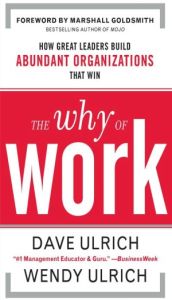
The Why of Work
Book

The Why of Work

How Great Leaders Build Abundant Organizations that Win

McGraw-Hill, 2010 mais...

Buy the book


Editorial Rating

8

getAbstract Rating

  • Applicable

Recommendation

Dave and Wendy Ulrich’s book about abundance is itself an example of abundance. Dave, a business writer, and Wendy, a psychologist, sweep you up in a tide of leadership ideas, processes, quotations and stories that hammer home a thesis so right and true you might mistake it for common sense: Workers who care about their jobs and understand why they work will exceed your expectations and break the boundaries of their job descriptions. They will better serve customers who, in turn, will bind themselves to the thoughtful firm that produced such an enlightened staff. If this sounds like the yellow brick road, the authors cobble together ample gold paving stones to build a solid path toward fulfilling your firm’s potential. They explain how every person and organization can change for the good, while earning a profit. Along with positive psychology and happiness research, you will find useful grids, summaries and assessment tools to help you shift staid cultures and motivate stale staffers. Some of the advice is soft and general; the authors acknowledge that they skim the surface of various disciplines. Yet when the Ulrichs become specific about how to build relationships or cultivate creativity, they show you concretely how to nurture a firm where business results and human development work together. getAbstract recommends this book to executives, managers and human resources personnel who hope to serve their customers and the world through deeper service to their employees.

Summary

The Meaning of Work

Work is a way people earn money, but it’s also a potential launch pad for human development and the exploration of real meaning in life. Work takes up a good chunk of most people’s waking hours. It often defines them. This quest for definition gives leaders the opportunity to connect with their staffers and shape the underlying meaning of their jobs, so they can contribute more of who they are or want to be. However, finding meaning is also another way of finding profit. Meaningful work is inherently good for the people in your firm and it’s good for business.

In the workplace, meaning wrestles with tedium, and the outcome matters, particularly for the workers whose quality of life is at stake. Amid the mind-boggling complexity of the modern world, more people are struggling with personal and professional issues, ranging from depression to a lack of connection to their jobs to an off-putting, “me-first mindset.” As a result, “deficit thinking” – a negative sense of pervasive mistrust and self-protection – quickly and easily becomes the workplace’s prevalent mode. Staffers driven by such thinking give less effort on the job because they are filled...

About the Authors

Dave Ulrich, a professor at the Ross School of Business at the University of Michigan and a partner at the RBL Group, has written 23 books. Psychologist Wendy Ulrich founded the Sixteen Stones Center for Growth.



Comment on this summary

  • Avatar
  • Avatar
    C. K. 2 decades ago
    Competencies, skills and abilities need to be clearly understood, i.e. the why of work.
    The ability to define the why of work is crucial to detrmine the skills (short-time), competence (can be adapted) and ability (the competence that grow aith experience).
    • Avatar
      2 decades ago
      Hi Chan, great points! Here we learn the importance of leaders within an organization understanding the "why of work" for their employees. But we must wonder, to what extent are the employees responsible for also building abundant organizations. Does it narrow down to the quality of who you are hiring?

More on this topic

Related Skills

发挥创意
建立自信
有效沟通
转化潜在客户
发展组织
数字化转型
Enable Digital Organization
Execute Digital Operations
生成和筛选潜在客户
人力资源
战略性创新
以德领导
健康生活
管理企业沟通
Manage Learning and Development
管理绩效
管理
市场营销
精通协作
促进多样性、公平与包容
销售
求职
Strengthen Team Collaboration
理解创新
职场技能
培养自律意识
理解沟通
成为女性领导者
Practice Transformational Leadership
理解创造力
激励团队
塑造组织文化
理解社会行为
Work Remotely
管理变革
愿意接受指导
培养成长型思维
创新
包容性领导
克服冒充者综合症
规划职业生涯
从事职业塑造
促进小组创意
战略性领导
Understand Organizational Behavior
培养毅力
促进讨论
有意图地生活
激励自己
推进职业发展
提出问题
应对职场政治
危机中领导
学会感恩
成为少数群体团队成员盟友
Build Digital Culture
拥抱智慧型失败
管理领导影响力
设定职业目标
Drive Team Performance
变革中领导
提升组织绩效
培养创新文化
促进开放沟通
实施敏捷管理
领导力
促进容错文化
理解动机
软技能
理解人类行为
理解组织变革
改善心理健康
处理棘手人际关系
提升客户导向
提升韧性
利用员工资源小组
建立和维护福祉
建立团队凝聚力
发展思维能力
利用双元性管理
建立包容性文化
克服挑战
理解组织运作
提升情商
建立客户关系
提升员工体验
高管领导力
发挥自身优势
拥抱挑战
实践服务型领导
Manage People and Talent
成为学员
赢得他人信任
理解组织文化
保障员工福祉
勇于脆弱
理解人格类型
传达企业使命
Foster Team Culture
擅长对话
职业发展
发展自我掌控力
管理个人声誉
构建个人影响力
精通人际关系技巧
应对困难对话
营造归属感
打造个人品牌
Navigate Leadership Challenges
克服孤独感
应对不确定性
培养好奇心
保持真实
谦逊为人
识别自身优势
培养灵活性
评估技能组合
寻找人生目标
展现同理心与关怀
管理员工关系
个人成长
建立心理安全感
发展自我意识
变得更加适应变化
培养积极心态
建立强大关系
拥抱变革
寻找意义
领导自我
了解自我