
跳过导航
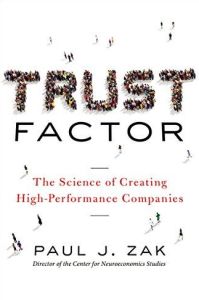
Trust Factor
Book

Trust Factor

The Science of Creating High-Performance Companies

HarperCollins Leadership, 2017 更多详情

Buy the book


Editorial Rating

9

getAbstract Rating

  • Applicable
  • Concrete Examples
  • Inspiring

Recommendation

While some leaders might decry “softer” management theories, neuroscience proves that treating your staff members like adult human beings and trusted colleagues pays off. In this engaging and accessible read, neuroeconomist Paul J. Zak shows how creating a “culture of trust” can turn around organizations that might be bound for failure. Based on findings from numerous scientific experiments, Zak examines trust, suggests eight areas to focus on, and outlines practical and manageable steps to bolster workplace bonds and employees’ effectiveness.

Summary

Improving trust in your organization increases performance, productivity and talent retention.

Every organization has a culture, whether it’s created intentionally or not, and that culture directs how people will behave. Successful organizations create cultures that are conducive to intrinsic motivation, high performance and cooperation. Trust is the pivotal ingredient in such a culture.

To experiment with the policy changes that build a trusting environment, define what you want to measure and how. Explain to your staff members the changes you’re making and what you hope these changes will achieve. Implement the changes and, after a period of time, measure the results. If a change proves effective, keep it and move on to the next experiment. If not, dismiss it – and move on to the next experiment.

To build a trusting corporate culture, follow policies listed according to the acronym “OXYTOCIN” – the hormone that trust releases.

If people show they trust you, your brain releases the neurochemical oxytocin, which increases empathy. That supports both the willingness to cooperate and the ability to ...

About the Author

Paul J. Zak is a professor of economics, psychology and management at Claremont Graduate University, California, where he founded the Center for Neuroeconomics Studies, a research laboratory that studies how people make decisions. 


Comment on this summary

More on this topic

Related Skills

推进职业发展
发挥创意
成为自驱学习者
变得更加适应变化
建立自信
职业发展
有效沟通
发展组织
数字化转型
Enable Digital Organization
Enhance Cybersecurity
Execute Digital Operations
培养创新文化
人力资源
以德领导
战略性领导
管理企业沟通
Manage Learning and Development
管理绩效
管理团队和部门
管理
市场营销
优化劳动力绩效
促进多样性、公平与包容
职场技能
实施敏捷管理
管理领导影响力
良好睡眠
发挥自身优势
Foster Team Culture
培养他人责任感
领导自我
战略性安置人才
设定绩效标准
支持内部流动
增强团队敏捷性
Navigate Leadership Challenges
实践服务型领导
培养积极心态
拥抱变革
提升技能
确保团队责任落实
从事职业塑造
发展自我掌控力
Develop Team Members
设定团队目标
Build Digital Culture
谦逊为人
提升韧性
指导员工
鼓励实验精神
提供灵活工作安排
保持真实
管理员工关系
激励团队
Manage People and Talent
勇于脆弱
Practice Transformational Leadership
创建职业发展路径
创新
养成学习习惯
寻找意义
留住员工
支持团队成员的职业发展
Build Security Culture
奖励员工贡献
提升组织绩效
建立团队凝聚力
高管领导力
提升情商
支持员工心理健康
软技能
推动员工参与度
提升员工体验
塑造组织文化
健康生活
Drive Team Performance
营造归属感
赢得他人信任
个人成长
追求终身学习
拥抱智慧型失败
精通人际关系技巧
练习正念
传达企业使命
领导力
管理情绪
改善心理健康
促进开放沟通
透明沟通
培养成长型思维
推动学习文化
建立心理安全感
建立和维护福祉
保障员工福祉
促进容错文化
管理压力
展现同理心与关怀