Перейти к содержанию сайта
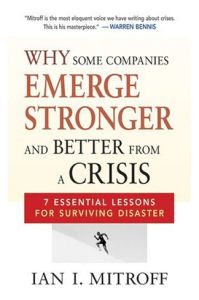
Why Some Companies Emerge Stronger and Better from a Crisis
Book

Why Some Companies Emerge Stronger and Better from a Crisis

7 Essential Lessons For Surviving Disaster

AMACOM, 2005 more...

Buy the book


Editorial Rating

7

getAbstract Rating

  • Applicable

Recommendation

In this book, author Ian I. Mitroff, an expert on crisis management, helps you attain the attitudes and philosophy you need to ensure that your organization implements crisis management correctly. Instead of repeating the basics of crisis management, he urges corporate leaders to learn, understand, adopt and practice attitudes and tactics that can help businesses implement crisis management more skillfully. This book will help you think about crisis management differently and will spur you to implement pre-crisis planning at your organization. The author’s stories about how companies have mishandled crises make it hard for you to miss the point. getAbstract.com believes executives and managers who read this book and buy into its philosophy will learn how to become better prepared for the unexpected, so they can make a difference when it really counts.

Summary

Thinking the Unthinkable

You may not like to think about a crisis affecting you or your organization, but you no longer have that choice. Before September 11, 2001, few people would have fathomed the scenario of a "flying bomb" destroying New York City skyscrapers. These attacks changed U.S. society’s assumptions of routine and safety. The world suddenly became more complicated and more dangerous. While it’s somewhat understandable that most American companies were not ready to contend with crises prior to the 2001 terrorist attacks, it is harder to fathom why many companies still remain ill equipped for potential crises.

Organizations must plan for crises, that is, any dangerous events threatening injuries, deaths and financial trouble that could deeply damage or even close your company. However, if you can muster seven specific abilities, you can better equip your organization to overcome a crisis. First, recalibrate your attitude. Recent crises and disasters included events that many once thought impossible. These calamities included terrorist attacks, a natural disaster large enough to take out a major city, cyber-attacks and corporate fraud. Today’s organizations...

About the Author

Ian I. Mitroff is a professor at the Marshall School of Business and the Annenberg School for Communications at the University of Southern California. He’s the author of numerous papers and books on crisis management, management policy and other areas of business.



Comment on this summary

More on this topic

Related Skills

AI Transformation
变得更加适应变化
有效沟通
企业财务
开发创新产品
发展组织
数字化转型
推动项目管理
Enhance Cybersecurity
提升员工体验
创业
培养创新文化
Foster Team Culture
人力资源
战略性创新
战略性领导
领导自我
健康生活
管理财务风险
管理绩效
市场营销
个人成长
战略性安置人才
制定战略规划
促进多样性、公平与包容
Understand AI
理解创新
理解组织运作
职场技能
管理财务危机
了解自我
科学思维
缓解认知偏差
软技能
Build Security Culture
Respond to Security Incidents
Govern Compliance and Risk
管理企业沟通
Understand AI Risks
理解组织变革
管理变革
战略思维
推动创造力
发展自我意识
寻找意义
变革中领导
保障员工福祉
提升韧性
高管领导力
使用情景规划
危机沟通管理
应对不确定性
培养好奇心
Navigate Leadership Challenges
战略沟通
建立心理安全感
理解人类行为
识别技能差距
管理企业声誉
应对困难对话
管理
批判性思维
创造性协作
生成创意
拥抱发散性思维
利用双元性管理
Manage People and Talent
领导力
克服挑战
支持员工心理健康
处理棘手人际关系
管理压力
创新
管理项目风险
改善心理健康
精通人际关系技巧
发展思维能力
挑战假设
建立和维护福祉
管理风险
理解情绪
危机中领导
管理危机
理解创造力
发挥创意
管理网络风险
确保业务连续性
提升情商
展现同理心与关怀
管理情绪