跳过导航
You’re It
Book

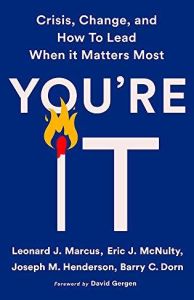
You’re It

Crisis, Change, and How to Lead When It Matters Most

Public Affairs, 2019 更多详情

Buy the book


Editorial Rating

9

getAbstract Rating

  • Innovative
  • Concrete Examples
  • Engaging

Recommendation

The faculty of the National Preparedness Leadership Initiative at Harvard University interviewed the leaders who responded to the 2013 Boston Marathon bombings, gleaning lessons about meta-leadership in a real-world context. They found that meta-leaders in Boston used “swarm intelligence“ to collaborate and mitigate harm. Leonard J. Marcus, Eric J. McNulty, Joseph M. Henderson and Barry C. Dorn draw on these findings to help leaders harness their analytic capabilities and unite diverse people to work together toward a shared vision, especially amid a crisis. The authors’ insights include how to deal with stress and how to reach a nuanced understanding of complex systems.

Summary

Meta-leaders align people around a shared mission and purpose. They understand systems, complexity and adaptive capacity.

In the hours after the Boston Marathon bombings in 2013, a strong response from community members, leaders, care providers and medical personnel helped reduce the impact of the attack. People reacting to the bombings offered successful examples of real-world meta-leadership. Their crisis responses ensured the survival of 264 injured people, though the explosions killed three spectators.

Many of these leaders had attended the National Preparedness Leadership Initiative at Harvard University (NPLI), an executive crisis leadership program, and others had attended its researchers’ meta-leadership seminars. Even though no one acted as an operational leader overseeing the entire bombing response, leaders each reacted effectively by employing “swarm leadership.” Each individual relied on the same consistent set of social cues and behaviors when making decisions and taking action. “Meta” denotes “transforming, above, beyond and at another level” – and these...

About the Authors

Leonard J. Marcus is the founding co-director of the National Preparedness Leadership Initiative, (NPLI), a joint program of the Harvard T.H. Chan School of Public Health and the Center for Public Leadership at the Harvard Kennedy School of Government. Eric J. McNulty is associate director, Joseph M. Henderson is a senior fellow, and Barry C. Dorn is a senior advisor at the NPLI



Comment on this summary

More on this topic

Related Skills

推进职业发展
AI Transformation
发挥创意
提升情商
职业发展
有效沟通
发展组织
未来工作
Drive Team Performance
培养创新文化
Foster Team Culture
人力资源
战略性创新
创新
做出明智决策
管理企业沟通
管理员工关系
Manage People and Talent
管理风险
管理
市场营销
个人成长
制定战略规划
促进多样性、公平与包容
塑造组织文化
理解组织运作
职场技能
发展思维能力
管理危机
以德领导
管理变革
Strengthen Team Collaboration
处理棘手人际关系
拥抱变革
软技能
促进小组创意
改善心理健康
理解团队动态
战略性领导
管理情绪
理解社会行为
在未知中抉择
促进讨论
影响他人
促进协作
理解领导方式
建立和维护福祉
提高文化意识
管理领导影响力
培养成长型思维
培养好奇心
拥抱发散性思维
确保业务连续性
领导远程或混合团队
精通协作
危机沟通管理
实践服务型领导
培养领导者
进行团队决策
成为女性领导者
发展自我掌控力
新兴领导方法
理解无意识偏见
跨部门协作
应对职场政治
变得更加适应变化
利用双元性管理
了解自我
提升韧性
理解认知
管理上级
培养毅力
Leverage AI for Leadership
Navigate Leadership Challenges
精通人际关系技巧
领导自我
以非权威之力推动变革
克服挑战
培养灵活性
变革中领导
高管领导力
化解冲突
挑战假设
危机中领导
Practice Transformational Leadership
发展自我意识
领导力
应对不确定性
缓解认知偏差
换位思考