Skip navigation
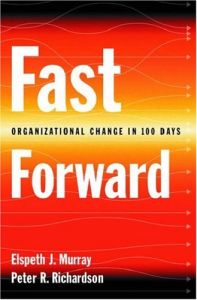
Fast Forward
Book

Fast Forward

Organizational Change in 100 Days

Oxford UP, 2002 more...

Buy the book


Editorial Rating

7

getAbstract Rating

  • Applicable

Recommendation

The lessons Elspeth Murray and Peter Richardson wish to convey about organizational change are important, applicable and easy to sum up: If you want to change, do it quickly. The first 100 days are crucial. Build “speed, critical mass and intelligent momentum.” Traditional models of decision making and strategic planning take too much time and contain far too many bottlenecks, making them inappropriate for the Information Age. The authors have done their research and they clearly explain the key elements of change and how to apply them to a range of situations. In fact, the authors do too good a job of emphasizing their main points: The book’s drawback is its repetitiveness. getAbstract recommends that leaders who haven’t yet managed a major change or those who wonder why their efforts have not succeeded read this book – especially the first half. Once you understand the core concepts, you may be able to read the rest less intently.

Summary

The Challenge of Change

Most organizations aren’t good at change and are structurally unprepared for it. Information trickles down too slowly, and damaging rumors spread faster than actual details about management’s plans. Leaders fail to build support among the rank and file, so the employees don’t understand the change, or if they do, they don’t agree with it. The leaders then have no idea how to handle the opposition. They fail to follow up, offer no rewards to those who support the change and impose no penalties against those who don’t. Also, many companies lack focus. They can’t make hard strategic decisions and don’t commit resources to long-term goals; they pay attention only to day-to-day operations and use inappropriate metrics to evaluate success.

Different kinds of change require different strategies. Once upon a time, you could allow change to unfold gradually and adjust the organization’s direction during the annual budget process. Those days are over. Nowadays you must be able to change your organization’s direction and culture quickly. How quickly? If you’re not well under way in 100 days, you’re in trouble. Your mission during this crucial period is...

About the Authors

Elspeth J. Murray is an associate professor at Queen’s University, where she focuses on strategic management, especially new endeavors. Peter R. Richardson is a professor at Queen’s University and the author of Cost Containment: The Ultimate Strategic Guide.



Comment on this summary

More on this topic

Related Skills

Advance Your Career
Become More Adaptable
Build Your Startup
Career
Communicate Effectively
Develop the Organization
Develop Your Thinking Skills
Digital Transformation
Drive AI Transformation
Enhance Cybersecurity
Enhance Employee Experience
Entrepreneurship
Execute Digital Operations
Human Resources
Innovation
Lead Yourself
Leverage AI for Business Strategy
Leverage AI for Leadership
Leverage AI for Management
Leverage AI in Your Daily Tasks
Live Well
Manage Corporate Communications
Manage People and Talent
Manage Product Innovation
Manage Teams and Departments
Marketing
Master Collaboration
Master Interpersonal Skills
Navigate Leadership Challenges
Personal Growth
Promote Diversity, Equity, and Inclusion
Soft Skills
Strengthen Team Collaboration
Understand Innovation
Understand Organizations
Workplace Skills
Dare to be Vulnerable
Leadership
Define Product Strategy
Mitigate Cognitive Biases
Navigate Uncertainty
Organize Innovation
Promote Customer Centricity
AI Transformation
Cultivate a Growth Mindset
Embrace Change
Build an Inclusive Culture
Foster Open Communication
Manage Internal Communication
Plan and Strategize for Growth
Build Security Culture
Drive Employee Engagement
Drive Team Performance
Lead Operational Planning
Foster Team Culture
Live Intentionally
Translate Strategy into Action
Lead Strategically
Practice Transformational Leadership
Organize for AI
Have Effective Meetings
Strategize Digital Transformation
Restructure Your Organization
Define Core Values
Drive Product Development
Leverage Employee Resource Groups
Production and Logistics
Set AI Vision & Strategy
Management
Streamline Your Workflow
Build a Shared Vision
Set and Achieve Goals
Define Digital Strategy
Communicate Transparently
Drive Organizational Performance
Develop a Business Plan
Drive Change Without Authority
Enhance Team Agility
Succeed in a New Job
Become More Productive
Implement Agility
Master Marketing Strategy
Innovate Strategically
Leverage Ambidexterity
Drive Continuous Improvement
Think Strategically
Use AI for Decision Support
Communicate Corporate Purpose
Shape Organizational Culture
Take Group Decisions
Make Data-Driven Decisions
Decide Under Uncertainty
Plan Strategically
Understand Organizational Change
Lead through Change
Set Business Goals
Communicate Corporate Strategy
Executive Leadership
Manage Change
Make Good Decisions
Communicate Strategically