
Book
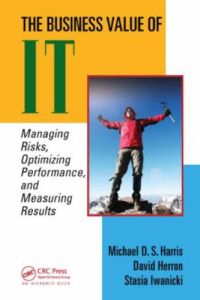
The Business Value of IT
Managing Risks, Optimizing Performance and Measuring Results



Right-click on the code to copy the image.
Note: On an ASP portal, the link behind the code is portal specific!
Recommendation
Too often, companies suffer from strained relationships between their businesspeople and their information technology (IT) staffers. Much of this irritation stems from differences in the way they view IT’s contributions. Experienced IT executives Michael D.S. Harris, David Herron and Stasia Iwanicki’s useful handbook explains how to get IT team members and organizational personnel to understand each other, initially by clearly defining IT’s contributions in business terms. Besides valuable information, graphs, charts and chapter summaries, the authors include the references for everything they cite so you can dig more deeply into areas that affect your work. getAbstract praises their ability to express their thesis in human terms rather than lapsing into dreary technical recitations, although the writing is sometimes awkward. While utterly focused on IT, their book is not too technical for managers who deal with those in the field. This book enables you to explore the strengths and weaknesses of a variety of IT-finance, data and measurement models so you can select the ones that fit your situation.
Summary
About the Authors
All three authors are experienced IT executives. Engineer David Herron co-founded and Michael D.S. Harris owns the David Consulting Group. They work with IT Decisions Coaching, where Harris is a partner. Herron has co-written two books and numerous articles on functional measurement. Stasia Iwanicki is a Six Sigma Black Belt with 18 years global IT experience.
Learners who read this summary also read
Related Skills

Digital Transformation

Technology Industry

Drive Project Management

Enable Digital Organization

Enhance Cybersecurity

Executive Leadership

Human Resources

Innovation

Lead Operational Planning

Manage People and Talent

Manage Supply Chain Operations

Management

Market Insights by Industry

Production and Logistics

Understand Innovation

Understand Organizations

Establish IT Governance

Manage Change

Understand Organizational Change

Leverage Outsourcing and Offshoring

Tech Industry Best Practices

Manage Cyber Risk

Manage Risk

Manage Project Risks

Comment on this summary