Skip navigation
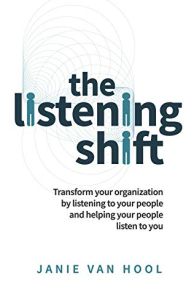
The Listening Shift
Book

The Listening Shift

Transform your organization by listening to your people and helping your people listen to you

Practical Inspiration Publishing, 2021 more...

Buy the book


Editorial Rating

8

getAbstract Rating

  • Applicable
  • Overview
  • Concrete Examples

Recommendation

Leadership training emphasizes the importance of honing communication skills. But employees can’t perform at their best unless they feel that management receives and values their input, leadership coach Janie van Hool argues. When people feel heard and understood, collaboration and trust increase, which fosters stronger relationships and reduces fear of change and uncertainty. Her helpful guide offers practical tools for developing the skills and mindset of a “listening leader” – including self-awareness and empathy – and strategies for ensuring your words resonate with your intended audience.

Summary

Listening skills are an essential but often overlooked element of clear, effective communication.

Leaders must have excellent communication skills to bring out the best in their people. They must not only say the right things and ask the right questions but also listen fully to what others have to say. When you listen well to other people, you boost their potential, whether you communicate face-to-face or via a virtual platform. Listening well also reduces feelings of uncertainty, resistance to change and the spread of rumors. It humanizes leaders, increases engagement and promotes an environment of trust and collaboration, making your organization stronger and more competitive.

Although communication skills are a vital element of leadership development, people often overlook the art of listening well. Most managers receive no listening instruction, and educators tend to emphasize the spoken word’s role in communication. Another impediment to listening well is cognitive dissonance, a phenomenon that explains why people are reluctant to embrace information that contradicts their present beliefs or harms their...

About the Author

Communication coach and adviser Janie Van Hool is a former actor who now works with business leaders in a wide range of organizations. She also volunteers with the Samaritans, a UK nonprofit whose members offer an empathetic ear to people in distress.



Comment on this summary

  • Avatar
  • Avatar
    L. D. 3 months ago
    This was a nice reminder as to how (active) listening on leaders and employees behalf's make the workplace stronger and more competitive. While on the flip side, if it is not implemented it can leave the workplace as incohesive and weaker.

More on this topic

Related Skills

Advance Your Career
Become More Adaptable
Become More Productive
Career
Convert Prospects
Drive Team Performance
Entrepreneurship
Executive Leadership
Foster a Culture of Innovation
Human Resources
Innovation
Lead Ethically
Lead Strategically
Live Well
Manage Corporate Communications
Manage Learning and Development
Management
Marketing
Master Collaboration
Personal Growth
Promote Diversity, Equity, and Inclusion
Sales
Secure Funding
Shape Organizational Culture
Strengthen Team Collaboration
Strengthen Your Digital Literacy
Workplace Skills
Become a Mentee
Be Emotionally Intelligent
Build Prospect Rapport
Pitch Your Business Idea
Set Boundaries
Motivate Your Team
Ask Questions
Enhance Your Focus
Support Employees’ Well-being
Address Microaggressions
Improve Your Mental Health
Communicate Strategically
Leadership
Cultivate Curiosity
Present to Prospects
Foster Team Culture
Influence Others
Manage Employee Relations
Manage Your Leadership Impact
Leverage Employee Resource Groups
Practice Mindfulness
Adapt Communication Style
Build and Maintain Well-Being
Show Empathy and Compassion
Present Data
Champion Diversity
Build Your Presence
Manage Internal Communication
Lead Inclusively
Leverage Social Learning
Communicate Non-Verbally
Develop Self-Mastery
Become an Ally to Minority Team Members
Communicate Across Cultures
Manage Your Emotions
Navigate Difficult Conversations
Present in Person
Promote a Learning Culture
Lead Yourself
Practice Humility
Build an Inclusive Culture
Understand Communication
Excel at Conversations
Develop Self-Awareness
Enhance Employee Experience
Live Intentionally
Facilitate Discussions
Practice Servant Leadership
Promote Generational Inclusion
Understand Yourself
Communicate Corporate Strategy
Soft Skills
Persuade Effectively
Communicate Inclusively
Master Interpersonal Skills
Build Psychological Safety
Communicate Clearly
Communicate Effectively
Facilitate Group Ideation
Foster Open Communication
Have Effective Meetings
Master Public Speaking
Listen Well