Saltar la navegación
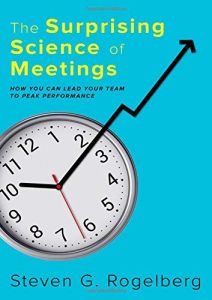
The Surprising Science of Meetings
Book

The Surprising Science of Meetings

How You Can Lead Your Team to Peak Performance

Oxford UP, 2019 más...

Buy the book


Editorial Rating

9

getAbstract Rating

  • Applicable
  • Well Structured
  • Concrete Examples

Recommendation

Many managers regard inefficient, unproductive or boring meetings as an unavoidable business flaw. Professor Steven G. Rogelberg challenges this assumption with ideas on how to stop wasting time and energy by facilitating better meetings. He bases his advice on research, best practices and surveys. Rather than cancelling meetings, he says, improve them by being mindful and skillful about their design and delivery. He suggests short “standing meetings,” which offer health benefits, satisfaction and efficiency. To improve your meeting culture, try his smart strategies. 

Summary

Acknowledge that meetings can cause a lot of frustration, and assess your meetings to seek improvements.

Everyone needs to meet for team discussions, interdepartment alignment and group decision making. But everyone needs to meet effectively. Meetings can cause frustration, especially when they waste time and energy due to a bad meeting culture.

Think of the opportunity costs: While you’re stuck with your colleagues in a meeting, you all could be spending time doing real work. When your company manages meetings effectively, meetings add to productivity and organizational cohesion. And when it doesn’t, they add to cost. In 2014, meetings cost the United States’ economy about $1.4 trillion – roughly 8% of the nation’s GDP that year.

Rather than getting rid of meetings, solve your problems with them by applying science.

Employees have no lack of cynicism when it comes to meetings. Yet getting rid of all meetings is not feasible. Without meetings, you would lose contact with your colleagues, disconnect from other departments and become single-minded about difficult problems. Rather than eliminating meetings...

About the Author

Steven G. Rogelberg is professor of organizational science, management and psychology at the University of North Carolina, Charlotte. He researches, teaches and consults with large organizations on meeting science. 


Comment on this summary

More on this topic

Related Skills

AI Transformation
Sea más adaptable
Construya y mantenga el bienestar
Desarrolle productos innovadores
Develop Team Members
Drive Team Performance
Emprendimiento
Liderazgo ejecutivo
Recursos humanos
Lidere estratégicamente
Lidérese a sí mismo
Leverage AI in Your Daily Tasks
Viva Bien
Tome buenas decisiones
Gestione el desempeño
Gestione equipos y departamentos
Administración
Domine la colaboración
Domine habilidades interpersonales
Navigate Leadership Challenges
Optimice el desempeño de la plantilla
Crecimiento personal
Promueva la diversidad, equidad e inclusión
Dé forma a la cultura organizacional
Fortalezca su alfabetización digital
Habilidades para el lugar de trabajo
Mejore la experiencia de los empleados
Work Remotely
Delegue de manera efectiva
Apoye a los demás
Gestione sus emociones
Fomente una cultura de innovación
Fomente la comunicación abierta
Innovación
Construya la cohesión del equipo
Lidere de forma inclusiva
Liderazgo
Navegue por la política de la oficina
Genere ideas
Practique la humildad
Reconozca señales sociales
Comuníquese con las partes interesadas
Compréndase a sí mismo
Foster Team Culture
Use AI for Meetings
Defina los valores fundamentales
Navegue por conversaciones difíciles
Realice evaluaciones de desempeño
Strengthen Team Collaboration
Sea más productivo
Mejore el diseño del espacio de trabajo
Garantice la responsabilidad en los equipos
Promueva la creatividad
Cultive la curiosidad
Lidere equipos remotos o híbridos
Sea emocionalmente inteligente
Administre su tiempo
Tome decisiones en grupo
Practique la atención plena
Escuche bien
Sobresalga en las conversaciones
Adopte el pensamiento divergente
Gestione el impacto de su liderazgo
Sea creativo
Colabore virtualmente
Presente virtualmente
Haga mejores preguntas
Construya seguridad psicológica
Motive a su equipo
Habilidades blandas
Facilite la ideación grupal
Comuníquese eficazmente
Comuníquese con humor
Cultive la positividad
Tenga reuniones eficientes
Colabore de forma creativa
Facilite las discusiones