

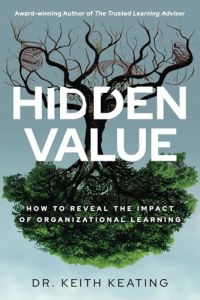
Book
Hidden Value
How to Reveal the Impact of Organizational Learning



Haz clic con el botón derecho del ratón para copiar la imagen.
Nota: En un portal ASP, ¡el enlace del código es específico del portal!
Recommendation
As entire industries change rapidly, individuals and businesses must dedicate themselves to constantly learning. Leadership often fails to value learning and development’s (L&D) critical role in creating capable, resilient organizations. Through illustrative case studies and exercises that encourage action, Chief Learning and Talent Officer Keith Keating explains how L&D professionals can connect learning programs with organizational goals and stakeholder priorities to demonstrate that L&D is an essential source of business success.
Summary
About the Author
Keith Keating, author of The Trusted Learning Advisor, advocates learning for individuals and organizations.
By the same author
Learners who read this summary also read
Related Skills

人工智能转型,实施基于人工智能的流程优化,跨部门整合人工智能解决方案,评估企业采用人工智能的准备情况

吸引和招聘人才

职业发展

数字化转型

启用数字化组织,促进数字化组织变革,提高运营中的数字化效率,支持数字工具的整合,为数字平台调整工作流

生成和筛选潜在客户

人力资源

领导力

利用人工智能进行人力资源管理,将人工智能洞察融入人力资源战略,实施自动化人力资源数据分析系统,利用人

个人成长

销售

求职

成为自驱学习者

建立雇主品牌

发展团队成员,识别团队技能差距,规划个人发展路径,支持员工的学习目标,使团队成长与业务需求相一致,认

提升员工技能和知识

打造个人品牌

利用人工智能进行学习与发展,将人工智能工具整合到培训项目中,通过人工智能洞察提升员工成长,利用人工智

推动学习文化

管理学习与发展,制定企业学习战略,管理员工学习路径,评估团队的发展需求,优化学习资源分配,评估培训项

衡量学习与发展的影响

Comment on this summary