



扫码即可阅读分享此浓缩书
Recommendation
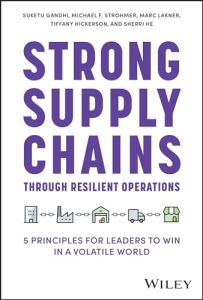
Companies have spent decades striving for lean supply chains and cutting supply chain costs. But the COVID-19 pandemic, wars, and natural disasters led to shortages of products, parts, and raw materials. This demonstrated that cost-cutting is risky in a volatile environment of geopolitical tensions, social unrest, and extreme weather. Global management consultants Suketu Gandhi, Marc Lakner, Sherri He, Tiffany Hickerson, and Michael F. Strohmer explain that businesses should build resilient, flexible supply chains. They outline a comprehensive program for cultivating a supply operation that can adapt to sudden shocks and continue to thrive, whatever the world throws at them.
Summary
About the Authors
The authors are with A.T. Kearney, where Suketu Gandhi is a global co-leader of the strategic operations practice. Marc Lakner is managing director for Germany, Austria, and Switzerland. Sherri He is managing director of the Greater China unit. Tiffany Hickerson is a partner in the strategic operations practice, where Michael F. Strohmer is the global co-leader. He is also the leader for procurement.
Learners who read this summary also read
Related Skills

生产与物流

管理供应链运营

人工智能转型,实施基于人工智能的流程优化,跨部门整合人工智能解决方案,评估企业采用人工智能的准备情况

变得更加适应变化

建立和维护福祉

利用人工智能进行管理,将人工智能工具整合到管理流程中,使用人工智能分析管理数据,利用人工智能增强团队

健康生活

管理风险

管理

个人成长

使用情景规划

发现供应链风险

克服挑战

培养成长型思维

培养积极心态

优化供应链物流

使用人工智能进行流程优化,利用人工智能自动化重复性工作流程,提升运营效率,通过人工智能解决方案减少流

实施 ESG 战略

供应链透明化

使用人工智能进行干扰监测,利用人工智能检测供应链干扰,使用人工智能工具监控生产异常,实施人工智能以检

使用人工智能进行库存优化,应用人工智能降低库存成本,利用人工智能洞察预测库存需求,使用人工智能工具优

提升韧性

利用人工智能进行仓库优化,实施人工智能以减少仓库错误,使用人工智能工具分析仓库效率,利用人工智能算法

可持续

在生产和供应链中使用人工智能,将人工智能融入供应链决策,通过人工智能技术简化生产,提高供应链效率,利

Comment on this summary