Melden Sie sich bei getAbstract an, um die Zusammenfassung zu erhalten.

Transcend

Melden Sie sich bei getAbstract an, um die Zusammenfassung zu erhalten.
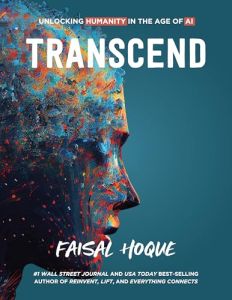
Transcend

Unlocking Humanity in the Age of AI

Post Hill,

15 Minuten Lesezeit
8 Take-aways
Audio & Text

Was ist drin?

Understanding how to regulate and design AI systems starts with understanding humanity itself.


Editorial Rating

7

getAbstract Rating

  • Analytical
  • Overview
  • Hot Topic

Recommendation

As AI’s use cases across multiple facets of human life grow, best-selling author and management thinker Faisal Hoque urges humanity to get clarity on what it means to be human — so it can protect the best of human values as AI technologies scale exponentially. Learn why both governments and businesses are in need of a culture shift if they want to drive innovation and support AI literacy, and gain frameworks to help you plan your own AI strategy. Now is the time to push for the type of AI that reflects the best of human nature, says Hoque. Inaction is a response humanity simply can’t afford.

Summary

Creating policies to shape the future of AI requires clarifying what humans value most.

AI is ubiquitous in much of everyday life. It’s involved in everything from the facial recognition software you use to unlock your phone to the songs your music streaming app plays next. As AI technologies evolve, many are justifiably concerned about the profound effects these emergent technologies could have on important facets of life, such as human agency and planetary health. Humanity must establish clear priorities about how to direct and govern AI’s use and development by reflecting on two questions: What does humanity value most, and thus need to protect?; and what should people value, despite the fact that they appear to overlook it?

Clarifying human values and uniquely human capacities is of vital importance when training large language models (LLMs): People must find some degree of alignment in terms of what constitutes a “good pattern” and is, therefore, worth reproducing at scale. For example, if you were training an LLM to speak, you’d want to identify the patterns of “good” human speech. Unlike...

About the Author

Faisal Hoque is a globally renowned management thinker and technologist, as well as an entrepreneur and innovator. He’s also a best-selling author of books such as Reinvent: Navigating Business Transformation in a Hyperdigital Era, and the founder of companies such as SHADOKA and NextChapter.


Comment on this summary

More on this topic

Related Skills

Unternehmensfinanzen
Die KI-Transformation durch führen
Entrepreneurship
Executive Leadership
Personalwesen
Führung
KI für Finanzen nutzen
Gute Entscheidungen treffen
Management
Marketing
Vertrieb
Berufliche Kompetenzen
KI für den Vertrieb nutzen
KI-Anwendungsfälle in der Fertigungsindustrie entdecken
KI für die Compliance nutzen
KI für die Datenanalyse nutzen
KI für persönliche Produktivität nutzen
KI-Anwendungsfälle in der Finanzbranche entdecken
KI zur Priorisierung von Funktionen nutzen
KI für Lernen und Entwicklung nutzen
KI für das Kundenerlebnis nutzen
KI in Ihren täglichen Aufgaben nutzen
KI zur Prozessoptimierung nutzen
KI-Anwendungsfälle in der Technologiebranche entdecken
AI-Governance etablieren
KI für Risikomodelle nutzen
Die KI-Akzeptanz in Teams fördern
Die Auswirkungen von KI auf Unternehmen und die Wirtschaft verstehen
Die gesellschaftlichen Auswirkungen von KI verstehen
Teams durch den Übergang zu KI führen
KI-Anwendungsfälle in der Beratungsbranche entdecken
KI für Führung nutzen
KI für das Marketing nutzen
KI verstehen
KI-Anbieter für Geschäftsstrategien entdecken
KI für das Personalwesen nutzen
KI für die Produktentwicklung nutzen
Nutze KI ethisch als Führungskraft
KI mit Unternehmenswissen nutzen
Organisieren für KI
Die Fähigkeiten und Grenzen von KI verstehen
KI zur Entscheidungsunterstützung nutzen
KI für das Management nutzen
Die Auswirkungen von KI auf das Geschäft messen
Die Transformation der KI-Arbeitskräfte planen
Die ethischen Auswirkungen von KI verstehen
KI für die Risikobewertung nutzen
KI sicher nutzen
Die KI-Vision und -Strategie festsetzen
Die Auswirkungen von KI auf die Arbeit verstehen
KI für die Unternehmensstrategie nutzen
KI ethisch nutzen
Anwendungsfälle für KI entdecken
KI-Transformation
Die Risiken von KI verstehen
KI-Prioritäten wählen