
Melden Sie sich bei getAbstract an, um die Zusammenfassung zu erhalten.
Melden Sie sich bei getAbstract an, um die Zusammenfassung zu erhalten.
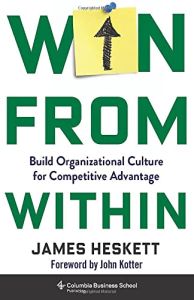
James Heskett
Win from Within
Build Organizational Culture for Competitive Advantage
Columbia Business School Publishing, 2022
Was ist drin?
With planning and the right strategies, you can create an effective, successful corporate culture.


Zusammenfassung verfügbar: weltweit
Recommendation
James Heskett, one of the most eminent business educators of the 20th century, offers a deep dive into how to build a successful organizational culture. Heskett, UPS Foundation Professor Emeritus at Harvard Business School, explains that having a strong culture does not always guarantee marketplace success. He tells you how to build and maintain a winning culture while avoiding the pitfalls of a culture that is strong but also toxic. Heskett maintains that leaders can shift a company’s culture in a matter of months. To that end, he offers many research-based examples that will be highly useful to everyone involved in managing organizations.
Summary
About the Author
James Heskett is the UPS Foundation Professor Emeritus at Harvard Business School, where he previously served as faculty chair of the MBA program.
Learners who read this summary also read
Related Skills















Comment on this summary
Si una compañía mantiene una cultura empresarial fundamentada en la confianza y el respeto recíproco, promoverá la fidelidad y el contento de su personal. Cuando un trabajador se siente apreciado, incrementa su dedicación a su labor y potencia sus esfuerzos para lograr las metas de la compañía.
Esto resulta en un incremento de la productividad y eficiencia que favorece directamente el desarrollo de la empresa.
En esta situación, los colaboradores se empeñarán en brindar un servicio superior a sus clientes y, en consecuencia, las adquisiciones se tornarán más habituales. Además, estos clientes, contentos con la atención recibida, pueden sugerir la compañía a otros clientes y transformarse en portavoces de la marca.
Así pues, esta clase de cultura organizacional fomenta el desarrollo del negocio mediante la conservación de los clientes actuales y la adquisición de nuevos clientes.
No obstante, una cultura organizacional perjudicial o descoordinada con las metas de la compañía puede provocar el efecto opuesto.