Skip navigation
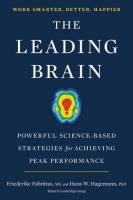
The Leading Brain
Book

The Leading Brain

Powerful Science-Based Strategies for Achieving Peak Performance

TarcherPerigee, 2017 more...

Buy the book


Editorial Rating

8

getAbstract Rating

  • Applicable
  • Concrete Examples
  • Engaging

Recommendation

Neuroscientist Friederike Fabritius and consultant Dr. Hans W. Hagemann have decades of experience helping organizations understand and leverage brain science for better performance and productivity. They describe the influence of neurochemicals on human performance in an engaging, clear manner that laypeople can easily understand. They detail scientific techniques and insights that can induce peak performance, both by living well and healthfully, and by organizing work to stimulate the release of neurochemicals. Though some of the advice they offer sounds mundane – deep-breathing exercises, positive thoughts, power posturing, or smiling to make yourself happier – the authors also provide applicable and original advice derived from the latest neuroscience. 

Summary

Knowing more about your brain can help you achieve moments of peak performance.

Many recent discoveries in brain science apply directly to business and leadership. This wealth of new insights from neuroscience can guide more effective organizational decisions, whether in personnel, finance, or other areas.

People reach peak performance in different ways. Unfortunately, few know how to put themselves into that zone. A better understanding of how your brain works can guide you toward achieving peak performance more often or even at will. When you experience just enough stimulus to narrow your focus on a task, but not so much that it causes extreme fear or anxiety, you’re ready to enter the zone.

Your brain consists of about a trillion neurons that communicate chemically through neurotransmitters. The fact that your neurons aren’t physically connected lets them rearrange themselves and create new pathways for learning.

To perform at your best, activate the three neurotransmitters; they are the “DNA of peak performance.”

Three neurotransmitters matter most to your performance. They form the acronym DNA.

  • <...

About the Authors

Friederike Fabritius and Dr. Hans W. Hagemann are frequent public speakers who consult and lead leadership development training using lessons from neuroscience. Fabritius is also the author The Brain-Friendly Workplace: Why Talented People Quit and How to Get Them to Stay. Hagemann, a psychologist, is managing partner and co-founder of the Munich Leadership Group.


Comment on this summary

More on this topic

Related Skills

Be Creative
Be Emotionally Intelligent
Become More Adaptable
Build Confidence
Develop Your Thinking Skills
Human Resources
Lead Ethically
Leadership
Manage Change
Manage Learning and Development
Manage Remuneration
Management
Navigate Leadership Challenges
Personal Growth
Plan and Strategize Your Sales
Promote Diversity, Equity, and Inclusion
Sales
Shape Organizational Culture
Soft Skills
Understand Yourself
Build Useful Habits
Support Employees’ Well-being
Learn from Experience
Pursue Lifelong Learning
Workplace Skills
Make Good Decisions
Understand Cognition
Take Other Perspectives
Take Group Decisions
Master Interpersonal Skills
Lead through Change
Practice Gratitude
Delegate Effectively
Leverage Employee Resource Groups
Promote a Learning Culture
Make Data-Driven Decisions
Place Talent Strategically
Design Incentive Structures
Overcome Self-Doubt
Become a Self-Driven Learner
Support Others
Foster a Culture of Innovation
Sleep Well
Enhance Employee Experience
Reward Employee Contributions
Dare to be Vulnerable
Become More Productive
Develop Self-Mastery
Facilitate Discussions
Innovation
Lead Yourself
Understand Motivation
Drive Employee Engagement
Foster Ownership in Others
Promote Neuro-Inclusion
Build an Inclusive Culture
Build Your Resilience
Manage Team Boundaries
Master Collaboration
Develop Team Members
Foster Collaboration
Cultivate Self-Discipline
Manage Your Leadership Impact
Live Well
Facilitate Group Ideation
Overcome Impostor Syndrome
Cultivate a Growth Mindset
Practice Humility
Improve Team Performance
Collaborate Creatively
Practice Mindfulness
Lead Remote or Hybrid Teams
Manage Your Emotions
Understand Personality Types
Create a Sense of Belonging
Enhance Team Agility
Practice Transformational Leadership
Understand Team Dynamics
Adopt a Learning Habit
Strengthen Team Collaboration
Build and Maintain Well-Being
Build Team Cohesion
Build Psychological Safety
Manage Sales Teams
Practice Servant Leadership
Lead Inclusively
Improve Your Mental Health
Motivate Your Team
Manage People and Talent
Foster Team Culture
Manage Stress
Drive Team Performance
Enhance Your Focus