
Melden Sie sich bei getAbstract an, um die Zusammenfassung zu erhalten.
Melden Sie sich bei getAbstract an, um die Zusammenfassung zu erhalten.
Max Tegmark
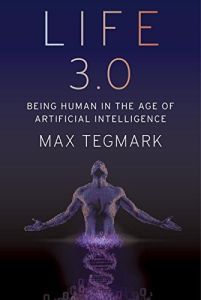
Life 3.0
Being Human in the Age of Artificial Intelligence
Knopf, 2017
Was ist drin?
After biological and cultural evolution, humans are poised on the precipice of Life 3.0: technological evolution.


Zusammenfassung verfügbar: weltweit, außer in Antigua and Barbuda, Australia, Bahamas, Bangladesh, Barbados, Belize, Botswana, Brunei Darussalam, Cameroon, Cyprus, Dominica, Fiji, Gambia, Ghana, Grenada, Guyana, India, Jamaica, Kenya, Kiribati, Lesotho, Malawi, Malaysia, Maldives, Malta, Mauritius, Mozambique, Namibia, Nauru, New Zealand, Nigeria, Pakistan, Papua New Guinea, Saint Kitts and Nevis, Saint Lucia, Saint Vincent and the Grenadines, Samoa, Seychelles, Sierra Leone, Singapore, Solomon Islands, South Africa, Sri Lanka, Swaziland, Tanzania, United Republic of, Tonga, Trinidad and Tobago, Tuvalu, Uganda, United Kingdom, Vanuatu, Zambia
Recommendation
Humans have passed through Life 1.0: biological evolution over vast time. In Life 2.0, people gained knowledge about politics, art, and science that changed how they see the world and their own purpose. In Life 3.0, which may come within the 21st century, humans will use powerful technology to transcend evolution. MIT theoretical physicist Max Tegmark explores what may happen and what it means. He becomes your guide through complex terrain – the nature of life, intelligence, and computation; the physics of energy; the future of the universe; and the questions people will face in a seriously different future world.
Summary
About the Author
Max Tegmark is a physics professor at the Massachusetts Institute of Technology and president of the Future of Life Institute. He also wrote Our Mathematical Universe.
By the same author
Learners who read this summary also read
What Does the AI Revolution Mean for Our Future?
How will AI impact our immediate and near future? Can the technology be controlled, and does it have agency? Watch DeepMind co-founder Mustafa Suleyman and Yuval Noah Harari debate these questions, with The Economist editor-in-chief Zanny Minton-Beddoes.

Comment on this summary