
Rejoignez getAbstract pour lire le résumé !
Rejoignez getAbstract pour lire le résumé !
Cliff Bowman and Paul Raspin
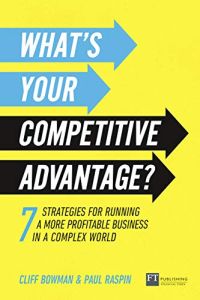
What's Your Competitive Advantage?
7 Strategies for Running a More Profitable Business in a Complex World
FT Publishing, 2018
Aperçu
In a world of constant change, detailed business planning doesn’t make sense. So, what does?


Disponibilité du résumé : mondiale
Recommendation
As a business leader, how do you make strategic plans in a constantly changing corporate world? Are your traditional tools for forecasting and comprehensive strategic planning still useful? Management experts Cliff Bowman and Paul Raspin say that the best tactic for realistic strategic planning is simple: Go back to the basics. The authors present “seven competitive strategies,” each to be deployed alone – and, mostly, one at a time, though different divisions may use different strategies. The authors warn against combining or embellishing these tactics. Embed them into your operations, secure reliable feedback and adjust if necessary. The authors base their recommendations on years of research into value creation and on the guiding principles of numerous disciplines, including “complexity science,” respected business theories, proven strategic prescriptions, and instructive case studies. This high-level, practical guidebook will help business leaders gain a competitive edge for their organizations.
Summary
About the Authors
Cliff Bowman, PhD, teaches strategic management at the Cranfield School of Management. Paul Raspin, PhD, is the founder and managing director of Stratevolve, a strategy consultancy.






Comment on this summary