
Зарегистрируйтесь на getAbstract, чтобы получить доступ к этому краткому изложению.
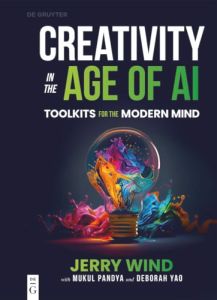
Зарегистрируйтесь на getAbstract, чтобы получить доступ к этому краткому изложению.
Jerry (Yoram) Wind, Mukul Pandya and Deborah Yao
Creativity in the Age of AI
Toolkits for the Modern Mind
De Gruyter, 2025
Что внутри?
The future of innovation lies in human curiosity and imagination — accelerated by AI.


Доступность краткого изложения по регионам: весь мир
Recommendation
As AI reshapes every corner of the business world, creativity is becoming more essential and attainable. The Wharton School’s Jerry Wind describes how emerging AI tools can act as catalysts, collaborators, and accelerators across the entire creative process. Integrating classic models of creativity and familiar frameworks for decision-making and problem-solving with cutting-edge capabilities — such as generative design and AI-assisted problem-solving — he shows how individuals and organizations can dramatically expand their creative capacity by combining human curiosity and machine intelligence. His example prompts make the advice immediately applicable.
Summary
About the Authors
Jerry Wind is professor emeritus and professor of marketing at the University of Pennsylvania’s Wharton School, where he co-founded the SEI Center for Advanced Studies in Management. Mukul Pandya is an associate fellow at Oxford University’s Saïd Business School and a consulting editor of Oxford Business Review. Deborah Yao, a business and tech journalist, is editor in chief of The AI Innovator.
Learners who read this summary also read
Related Skills









Comment on this summary