
Зарегистрируйтесь на getAbstract, чтобы получить доступ к этому краткому изложению.
Зарегистрируйтесь на getAbstract, чтобы получить доступ к этому краткому изложению.
James C. Crimmins
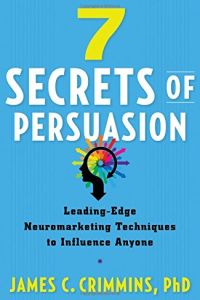
7 Secrets of Persuasion
Leading-Edge Neuromarketing Techniques to Influence Anyone
Career Press, 2016
Что внутри?
To understand the art of persuasion, ask cognitive science for guidance in dealing with the lizard mind.


Summary availability: Worldwide
Recommendation
To understand the art of persuasion, you can turn to cognitive science for guidance in dealing with the unconscious “lizard” mind. Advertising strategist James C. Crimmins investigates the cognitive science behind motivation to show you how to persuade others more effectively. The “automatic” part of the human mind – the lizard brain – affects many decisions. To persuade the lizard to cooperate, learn its language. To be persuasive, help it fulfill its desires. Crimmins explains how to unearth the lizard’s drives and change its expectations so they match the consumer’s experience of your message. Note that the way you convey a message may matter more than the message itself. getAbstract recommends this fascinating overview to marketing professionals and anyone seeking insight into how people think and what motivates them to act.
Summary
About the Author
A sociologist and statistician by training, James C. Crimmins, PhD, worked for 27 years as a strategist with Needham, Harper & Steers and DDB Worldwide, working with such brands as Budweiser and McDonald’s. He also taught integrated marketing communication at Northwestern University’s Medill School.




Comment on this summary