Skip navigation
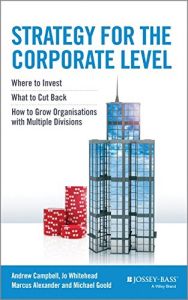
Strategy for the Corporate Level
Book

Strategy for the Corporate Level

Where to Invest, What to Cut Back and How to Grow Organisations with Multiple Divisions

Jossey-Bass, 2014 more...

Buy the book


Editorial Rating

8

getAbstract Rating

  • Applicable

Recommendation

This overview of corporate strategy has the strengths of a good textbook. It moves through core concepts for developing strategy on the corporate level a step at a time, provides definitions and explains the underlying principles. It lists the issues in different strategic areas and distinguishes between major and minor concerns. Business management researcher Andrew Campbell – writing with fellow Ashridge Business School faculty members Jo Whitehead, Marcus Alexander and Michael Goold – provides context, historical background and tools executives can use to implement and apply the text’s concepts. This methodical approach provides great utility. However, also like most textbooks, the reading is a little dry, even when the concepts prove new and useful. getAbstract recommends this knowledgeable guidebook to anyone seeking a comprehensive overview of corporate strategy, to new leaders and to executives looking to raise their strategic game.

Summary

Corporate Strategy

In addition to business strategies for each individual product and unit, multidivision corporations need a strategy for the “corporate level” decisions. This strategy guides management’s choices about where your company should invest, how it should diversify, when and if it should move into new regions, and how to budget for each area. Your overall strategy addresses decisions about management and structure, as well as the relationships among various units. Your first set of decisions relates to your “portfolio strategy.” Use “three logics” to guide your choices:

  • “Business logic” – Aim to accomplish the basics of logical business success: being active in “attractive markets,” earning a profit and establishing sufficient differentiation to generate a competitive advantage. Know your competition. Evaluate your position in your markets and assess the relative strength of your business.
  • “Added value logic” – Focus this “parenting logic” on the way corporate-level managers add “value to a business.” Compute added value by asking how each business relates to the rest of the company, consulting outside technological experts, ...

About the Authors

Andrew Campbell is the co-author of Corporate-Level Strategy, written with Marcus Alexander and Michael Goold. Jo Whitehead wrote What You Need to Know about Strategy. All four authors are directors of the Ashridge Strategic Management Centre.


Comment on this summary

More on this topic

Related Skills

Communicate Effectively
Develop Financial Literacy
Develop Innovative Products
Develop Your Thinking Skills
Markets in Asia
Markets in India
Foster a Culture of Innovation
Human Resources
Increase Your Cultural Awareness
Innovation
Lead Operational Planning
Lead Strategically
Leadership
Manage People and Talent
Manage Product Innovation
Manage Teams and Departments
Market Insights by Region
Marketing
Plan Financial Performance
Secure Funding
Shape Organizational Culture
Soft Skills
Strengthen Team Collaboration
Understand Economics
Workplace Skills
Manage Investment Portfolio
Financial Markets
Corporate Finances
Lead Mergers and Acquisitions
Think Strategically
Translate Strategy into Action
Build Your Startup
Select Ideas
Stocks
Communicate Corporate Strategy
Develop the Organization
Opportunities in India
Executive Leadership
Master Marketing Strategy
Define Product Strategy
Collaborate Across Functions
Think Analytically
Business Impact of Taxation
Communicate Strategically
Innovate Business Models
Develop a Business Plan
Start-up Case Studies
Execute Buy-Outs
Challenges in Asia
Discover Global Perspectives
Foster Collaboration
Leverage Ambidexterity
Set Business Goals
Plan and Strategize for Growth
Management
Leverage Private Equity
Master Budgeting
Restructure Your Organization
Conduct Due Diligence
Master Collaboration
Drive Organizational Performance
Innovate Strategically
Plan Strategically
Discover Investing Case Studies
Entrepreneurship
Excel at Investing
Succeed as an Entrepreneur
Drive Business Development
Understand Organizations
Master Corporate Valuation
Value Investing
Drive Investments and M&A