Skip navigation
The Agility Shift
Book

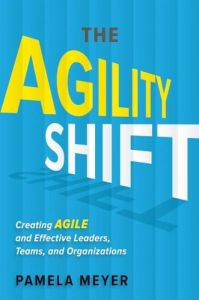
The Agility Shift

Creating Agile and Effective Leaders, Teams, and Organizations

Bibliomotion, 2015 more...

Buy the book


Editorial Rating

7

getAbstract Rating

  • Applicable

Recommendation

Traditional organizations – those that plan for expected events, rely on formal performance reviews, and require authorizations and sign-offs before making decisions – face increasing risk. Today’s business universe is complex, ambiguous and volatile. Survival requires fast, effective responses. The agility that business consultant and instructor Pamela Meyer advocates can help companies respond to sudden change and challenges with speed and confidence. Agility turns threats into opportunities. Meyer describes how leading organizations thrive in an unpredictable world by developing agile individuals, agile teams and a flexible culture. getAbstract recommends her manual as a leader’s guide to cultural transformation, a career tool for employees and a manual for learning professionals – must reading for CEOs, HR managers, start-ups and small business owners.

Summary

Agile Expertise

On January 15, 2009, Captain Chesley Sullenberger was at the helm of a jet that suddenly lost altitude over New York City. Geese flew into both engines, rendering them useless. During his military career, Sullenberger’s study of accidents that killed many of his friends showed him that delayed decisions cost lives. He quickly decided that landing on the Hudson River offered the best chance of survival for the 155 people aboard his plane. Sullenberger demonstrated exemplary agility in the face of a sudden, unexpected event.

Although the world of business and work doesn’t require you to land planes on the Hudson, it is increasingly volatile and uncertain. Today, planning and analysis aren’t enough in a crisis. You must develop the ability to respond effectively to the unexpected. You and your organization must be agile.

Developing Agility

Agile organizations financially outperform those that are not. The softer benefits of agility include productive, engaged workers who stay with your firm longer and enjoy their work. Agility is not planning. Plans survive only until reality intrudes. Accepting that you can’t predict the future or control...

About the Author

Pamela Meyer writes, teaches and consults in the field of agility and innovation.


Comment on this summary

More on this topic

Related Skills

AI Transformation
Be Creative
Be Emotionally Intelligent
Career
Develop the Organization
Digital Transformation
Drive AI Transformation
Drive Project Management
Enable Digital Organization
Execute Digital Operations
Human Resources
Innovate Strategically
Leverage AI for HR
Live Well
Manage Change
Manage Learning and Development
Personal Growth
Search for a Job
Soft Skills
Workplace Skills
Build Digital Culture
Embrace Challenges
Develop Self-Awareness
Drive Organizational Performance
Lead Remote or Hybrid Teams
Network Strategically
Dare to be Vulnerable
Use AI for Workforce Planning
Leverage AI for Management
Practice Transformational Leadership
Drive Employee Engagement
Lead Strategically
Plan AI Workforce Transformation
Develop Self-Mastery
Encourage Experimentation
Navigate Uncertainty
Adopt a Learning Habit
Manage Your Leadership Impact
Apply Scrum
Collaborate Creatively
Develop Your Thinking Skills
Innovation
Management
Attract and Recruit Talent
Become a Self-Driven Learner
Foster a Culture of Innovation
Overcome Challenges
Promote a Learning Culture
Leadership
Master Interpersonal Skills
Leverage Ambidexterity
Lead through Change
Enhance Employee Experience
Executive Leadership
Manage People and Talent
Build Strong Relationships
Navigate Leadership Challenges
Drive Team Performance
Strengthen Team Collaboration
Lead Yourself
Place Talent Strategically
Cultivate Flexibility
Embrace Change
Create a Hiring Strategy
Manage Talent
Cultivate a Growth Mindset
Enhance Team Agility
Become More Adaptable
Implement Agility