Acesse a sua conta getAbstract para obter o resumo!

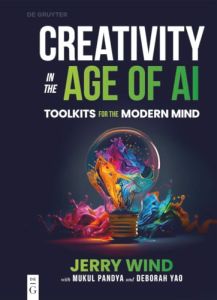
Creativity in the Age of AI

Acesse a sua conta getAbstract para obter o resumo!

Creativity in the Age of AI

Toolkits for the Modern Mind

De Gruyter,

15 min. de leitura
10 Ideias Fundamentais
Áudio & Texto

Sobre o que é?

The future of innovation lies in human curiosity and imagination — accelerated by AI.


Editorial Rating

9

getAbstract Rating

  • Applicable
  • Well Structured
  • Concrete Examples

Recommendation

As AI reshapes every corner of the business world, creativity is becoming more essential and attainable. The Wharton School’s Jerry Wind describes how emerging AI tools can act as catalysts, collaborators, and accelerators across the entire creative process. Integrating classic models of creativity and familiar frameworks for decision-making and problem-solving with cutting-edge capabilities — such as generative design and AI-assisted problem-solving — he shows how individuals and organizations can dramatically expand their creative capacity by combining human curiosity and machine intelligence. His example prompts make the advice immediately applicable.

Summary

Creativity has become a necessity in the business world — and it’s a skill anyone can learn.

Creativity has become an essential for organizational success. Research shows that creativity correlates with business growth and market share. According to McKinsey, companies in the most innovative quartile achieve 2.4 times the revenue growth of other firms. But the great majority of teams still struggle to apply creativity to problem-solving. Happily, creativity is a skill that anyone, at any age, can develop by systematically applying specific approaches.

Creativity is more than imagining something new. Many people have good, even brilliant, ideas from time to time. Creativity is when these ideas translate into practical value. In 1926, psychologist Graham Wallas helped demystify the creative process by defining the four psychological stages of creativity: During preparation, you consciously identify and learn about a problem; in the incubation stage, you let the problem “stew” in your subconscious; illumination occurs when a possible solution presents itself; and during the verification stage, you refine the idea to make it feasible and effective.

Almost a century...

About the Authors

Jerry Wind is professor emeritus and professor of marketing at the University of Pennsylvania’s Wharton School, where he co-founded the SEI Center for Advanced Studies in Management. Mukul Pandya is an associate fellow at Oxford University’s Saïd Business School and a consulting editor of Oxford Business ReviewDeborah Yao, a business and tech journalist, is editor in chief of The AI Innovator.


Comment on this summary

More on this topic

Related Skills

企业财务
开发创新产品
创业
行政领导
培养创新文化
人力资源
领导能力
利用人工智能制定业务战略
利用人工智能提升领导力
利用人工智能进行管理
利用人工智能开展营销
利用人工智能促进销售
做出正确的决定
管理层
市场营销
个人成长
生产和物流
销售
加强团队协作
了解人工智能
了解创新
将人工智能用于生产和供应链
工作场所技能
利用人工智能优化库存
利用人工智能促进人力资源
利用人工智能提供决策支持
应用开放式创新
探索旅游业中的人工智能应用案例
促进小组构思
利用人工智能开展金融业务
衡量人工智能的业务影响
为人工智能组织起来
了解人工智能对工作的影响
利用人工智能进行情感分析
利用公司知识使用人工智能
探索消费品行业的人工智能应用案例
探索人工智能在咨询业的应用案例
推动人工智能转型
使用人工智能确定功能优先级
将人工智能用于一般研究
在日常工作中利用人工智能
了解人工智能风险
使用人工智能创建图像和视频
使用人工智能进行演示
探索人工智能的最新进展
产生想法
利用人工智能打造客户体验
促进创造力
利用人工智能获取竞争对手情报
利用人工智能优化流程
利用人工智能提高个人生产力
利用人工智能生成营销内容
探索人工智能应用案例
了解人工智能对商业和经济的影响
利用人工智能进行营销分析
使用人工智能进行原型设计
使用人工智能进行销售预测
将人工智能用于写作和交流
探索零售业的人工智能应用案例
利用人工智能分析客户反馈
利用人工智能进行需求预测
使用人工智能进行用户研究
创新
创意无限
推动团队采用人工智能
引导团队完成人工智能过渡
了解生成式人工智能
利用人工智能进行产品开发
利用人工智能进行市场分析
创新合作
利用人工智能进行数据分析
人工智能转型
了解创造力
利用人工智能生成创意