
加入 getAbstract 阅读摘要
加入 getAbstract 阅读摘要
Gerald Zaltman
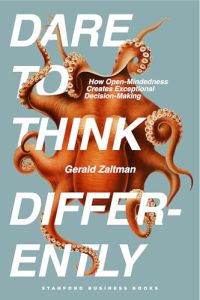
Dare to Think Differently
How Open-Mindedness Creates Exceptional Decision-Making
Stanford UP, 2026
看看什么内容?
How great leaders think — not what they do — separates them from merely good leaders.


摘要提供范围:全球
Recommendation
Self-help books have long sought to identify the traits of great leaders. Emotional intelligence, clear communication, and a growth mindset are commonly cited keys to success. Neuromarketing expert Gerald Zaltman proposes another essential characteristic: an open mind. Drawing on examples from business, research, and real-world problem-solving, his practical guide illustrates how the right mental habits lead to stronger ideas and better decisions, while teaching you to think about how you think. Zaltman urges you to embrace uncertainty, remain flexible, and challenge your assumptions so you can unlock new possibilities.
Summary
About the Author
Gerald Zaltman is the Joseph C. Wilson Professor Emeritus at Harvard Business School, the co-founder of Olson Zaltman Associates with marketing scholar Jerry Olson, and the author or editor of more than 20 books, including the influential How Customers Think and Marketing Metaphoria, co-authored with his son, Lindsay Zaltman.






Comment on this summary