Join getAbstract to access the summary!

The Future of Work Is Grey

Join getAbstract to access the summary!
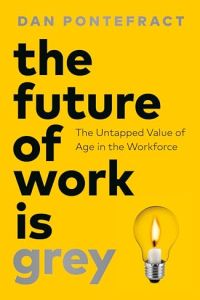
The Future of Work Is Grey

The Untapped Value of Age in the Workforce

Dan Pontefract,

15 min read
7 take-aways
Audio & text

What's inside?

Build an age-inclusive organization that values experienced workers and encourages them to pass along their knowledge.


Editorial Rating

9

getAbstract Rating

  • Eye Opening
  • Hot Topic
  • Engaging

Recommendation

If your organization isn’t prepared to handle the challenges of a rapidly aging workforce, leadership consultant Dan Pontefract, also the author of The Purpose Effect, provides a wake-up call. Whether you’re leading aging workers — or becoming one — his pragmatic book urges you to see age as an asset. Pontefract offers practical tips for supporting employee retention and longevity, including flexible career paths that allow staff members of all ages to continue learning and growing. He also highlights the crucial need for younger employees to work alongside older ones to benefit from their expertise.

Summary

Plan for the realities of a future with fewer young workers.

When author Dan Pontefract visited Tokyo in 2025, he was surprised to learn that his taxi driver was 74 years old. The man, who had retired at 60, started driving a cab five years later to stave off loneliness and boredom — and to earn money. Traditionally, Japanese workers spend their career at a single company and retire at 55 or 60 with a pension. However, Japanese households now need approximately ¥20 million (about $127,000) more than pensions provide to meet basic retirement needs.

By 2031, people 65 and older will make up more than a third of Japan’s population, pushing the cost of pensions beyond the government’s capacity. Despite this problem, only 2% of Japanese companies have raised their mandatory retirement age, according to a 2024 survey by Dr. Hiroshi Ono of Hitotsubashi University’s Business School. Moreover, Japan’s current birth rate cannot sustain its population or, eventually, supply a pool of younger workers. According to the OECD, that requires a national birth rate of 2.1 children per woman, and Japan’s 2025 birth rate was just 1.15.

While Japan’s situation is particularly urgent...

About the Author

Leadership consultant and speaker Dan Pontefract is an adjunct professor at the University of Victoria and the author of five award-winning books: The Purpose Effect; Flat Army; Lead, Care, Win; Work-Life Bloom; and Open to Think.


Comment on this summary