Skip navigation
The Intelligence Trap
Book

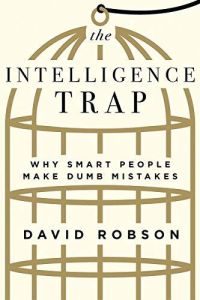
The Intelligence Trap

Why Smart People Make Dumb Mistakes

W.W. Norton, 2019 more...

Buy the book


Editorial Rating

9

getAbstract Rating

  • Applicable
  • Concrete Examples
  • Hot Topic

Recommendation

A high IQ can be meaningless if you’re not thinking soundly, and bright people can misuse their intelligence to reinforce biases. Being smart, it turns out, is not the same as being wise. Author David Robson explains the ways intelligent people form erroneous and even irrational opinions. He links the latest research findings about improving mental flexibility and beating the “traps” of intelligence to interesting stories about how smart people made big mistakes.

Summary

Lewis Terman developed the IQ test to measure general intelligence and predict future success.

The success of those with high IQs later in life seemed to prove Lewis Terman was correct about general intelligence: No matter their path in life, those with higher intelligence seemed to do well. But too often they just encountered better treatment and received better opportunities. Most people assume that high intelligence also means high common sense and better judgment. Terman’s test evaluates verbal, mathematical and abstract reasoning skills. It’s the basis for standardized tests like the SAT and GRE, which universities use routinely to measure academic achievement. While useful, they don’t comprehensively measure a person’s “total intellectual potential.”

Robert Sternberg developed the Triarchic Theory of Successful Intelligence which measures three aptitudes: “creative, practical” and “analytical” intelligence. Creative intelligence measures a person’s ability to imagine and invent. Practical intelligence involves planning and executing an idea, and it incorporates experience in problem solving. Sternberg warns that emphasizing...

About the Author

Journalist David Robson’s work has appeared in BBC Future, New Scientist, The Atlantic and other publications.


Comment on this summary

More on this topic

Related Skills

Be Creative
Be Emotionally Intelligent
Become More Adaptable
Communicate Effectively
Enhance Employee Experience
Executive Leadership
Foster a Culture of Innovation
Human Resources
Lead Ethically
Lead Yourself
Manage Performance
Management
Personal Growth
Plan and Strategize Your Sales
Sales
Shape Organizational Culture
Understand Innovation
Understand Organizations
Workplace Skills
Adopt a Learning Habit
Communicate Transparently
Master Collaboration
Understand Human Behavior
Make Good Decisions
Manage Teams and Departments
Understand Organizational Culture
Navigate Leadership Challenges
Embrace Divergent Thinking
Mitigate Cognitive Biases
Soft Skills
Innovation
Understand Communication
Foster Collaboration
Enhance Team Agility
Increase Your Cultural Awareness
Understand Leadership Approaches
Promote Failure-tolerance
Leadership
Understand Creativity
Understand Organizational Behavior
Become a Self-Driven Learner
Understand Cognition
Develop Self-Awareness
Practice Servant Leadership
Improve Team Performance
Ask Questions
Cultivate Curiosity
Challenge Assumptions
Build Team Cohesion
Facilitate Discussions
Understand Yourself
Manage Sales Teams
Understand Personality Types
Manage Your Leadership Impact
Develop Your Thinking Skills
Master Interpersonal Skills
Cultivate a Growth Mindset
Motivate Your Team
Practice Humility
Take Other Perspectives
Drive Team Performance
Support Others
Navigate Office Politics
Lead Inclusively
Facilitate Group Ideation
Manage People and Talent
Collaborate Creatively
Take Group Decisions
Foster Team Culture
Build Psychological Safety
Understand Social Behavior
Strengthen Team Collaboration
Understand Team Dynamics