
Únete a getAbstract para acceder al resumen.
Únete a getAbstract para acceder al resumen.
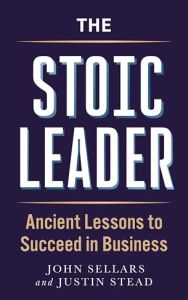
John Sellars and Justin Stead
The Stoic Leader
Ancient Lessons to Succeed in Business
Michael O'Mara Books, 2025
¿De qué se trata?
Stoic philosophers’ ideas can help modern business leaders handle challenges with equanimity and wisdom.


Summary availability: Worldwide
Recommendation
As emperor of Rome, Marcus Aurelius understood the pressures of leadership. He exemplified Stoic philosophy, which emphasizes developing workable strategies for confronting challenges with equanimity and integrity. Authors John Sellars and Justin Stead demonstrate that the classical Stoic philosophers – such as Seneca, Epictetus, and Hierocles – were not ivory tower thinkers. They often held powerful positions in politics and business, and their philosophy focused on practical issues, including decision-making, time management, and contending with adversity. In this lively discussion, the authors show how Stoic ideas from ancient Rome and Greece offer powerful tools for leaders in the digital age.
Summary
About the Authors
John Sellars is a philosophy scholar at Royal Holloway, University of London; a member of Wolfson College, Oxford; and a visiting research fellow at King’s College, London, home of the Ancient Commentators on Aristotle project. The chair of the nonprofit Modern Stoicism, he also wrote The Pocket Stoic, The Pocket Epicurean, Stoicism, and other books on ancient philosophy. Justin Stead is chair of Walkers Shortbread, a leader in other consumer-brand companies, and a board member of Digital MR, an AI marketing research company. He founded the Aurelius Foundation.




Comment on this summary